
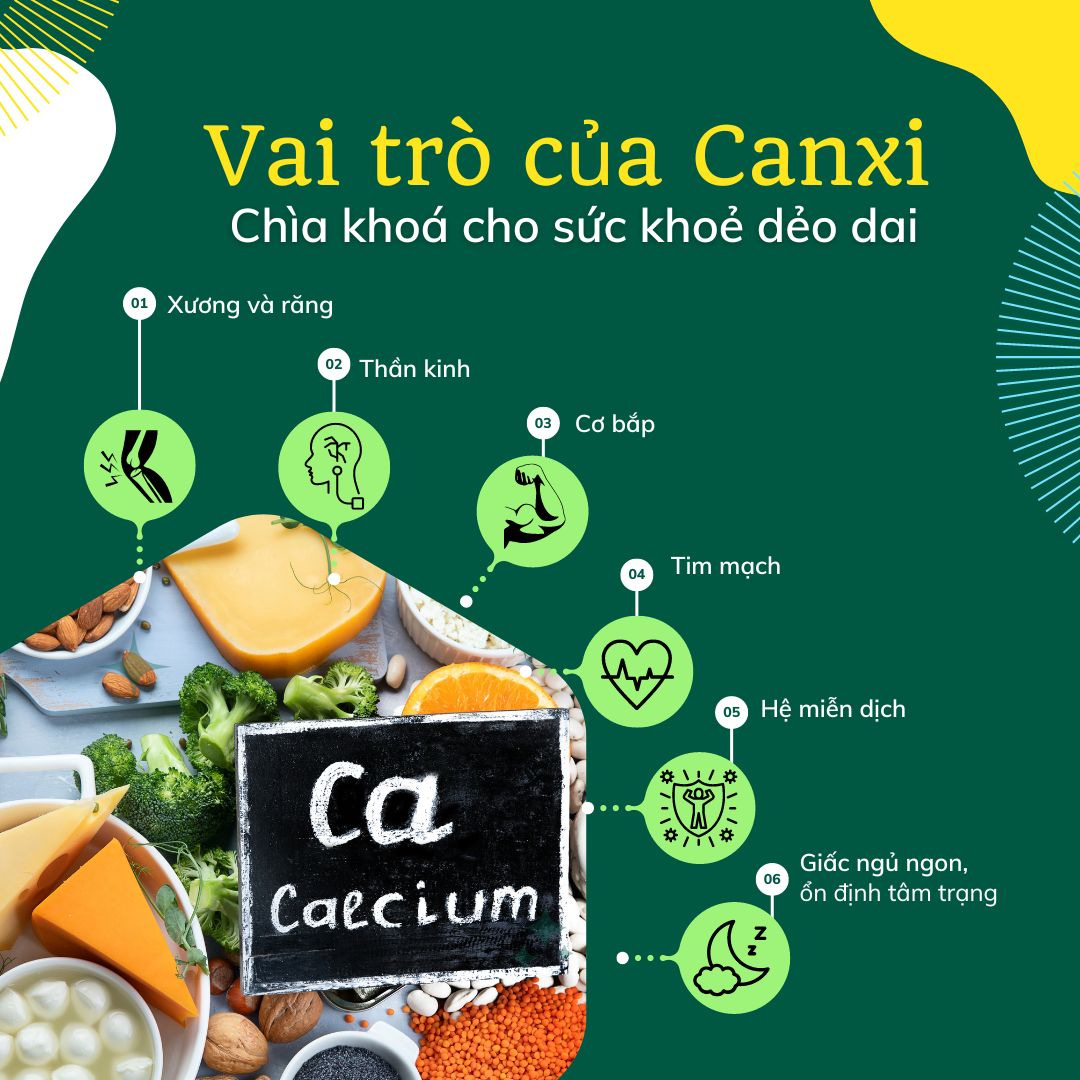
THE ROLE OF CALCIUM IN BODY DEVELOPMENT
Canxi là gì
Calcium is an important and essential mineral for the body. It not only plays a major role in the formation and maintenance of bones and teeth, but also participates in many other biological functions such as nerve signal transmission, muscle contraction and blood clotting.
 Calcium in the body
Calcium exists in the body in two forms:
Calcium in bones: The chemical composition of bones includes: 25% water, 20% protein, 5% lipid, a small amount of glycosaminoglycan and nearly 50% minerals, of which most minerals are calcium salts.
Extra-skeletal calcium: The amount of calcium in the extracellular fluid and soft tissue of normal people is not more than 10g. Extra-skeletal calcium is necessary for neuromuscular activities and blood clotting.
The role of calcium
Calcium is important for all ages and stages of life. In particular, adequate calcium intake can provide significant health benefits.
 The role of calcium
 for children
Children need a lot of calcium to develop strong bones and teeth. Calcium helps build strong bone structure, supports height growth and prevents bone diseases such as rickets. Adequate calcium supplementation also helps children have a stronger immune system.
The role of calcium for pregnant women
Pregnant women need to supplement calcium not only for themselves but also for the development of the fetus. Calcium helps form the bones, teeth and cardiovascular system of the fetus, and prevents osteoporosis in the mother. Lack of calcium during this period can lead to complications such as gestational hypertension and premature birth.
The role of calcium for women in pre-menopause
Women in perimenopause face a high risk of osteoporosis due to the decrease in estrogen hormone. Adequate calcium supplementation helps maintain bone density, prevent osteoporosis and reduce the risk of fractures. Calcium also helps stabilize the nervous system and reduce premenopausal symptoms such as hot flashes.
The role of calcium for the elderly
Older adults need more calcium to maintain bone health and prevent osteoporosis. Calcium supplementation helps strengthen bone structure, reduce the risk of fractures and improve quality of life. Calcium also helps regulate blood pressure and supports cardiovascular function.
 Calcium for the elderly
Calcium requirement table for each age
Each age has different calcium needs, and providing enough calcium is essential to maintain overall health. Below is a table of recommended calcium needs for each age:
Age Group | Daily Calcium Requirement (mg) |
Infants (0–6 months) | 200 mg |
Infants (7–12 months) | 260 mg |
Children (1–3 years) | 700 mg |
Children (4–8 years) | 1,000 mg |
Adolescents (9–18 years) | 1,300 mg |
Adults (19–50 years) | 1,000 mg |
Women over 50 years | 1,200 mg |
Men over 70 years | 1,200 mg |
Common calcium problems
Calcium deficiency
Calcium deficiency can cause many serious health problems. In children, calcium deficiency can lead to rickets, stunted growth, and dental problems. In adults, calcium deficiency leads to osteoporosis, an increased risk of fractures, and muscle pain. Other symptoms of calcium deficiency include muscle spasms, numbness in the limbs, and irregular heartbeat.
Hypercalcemia
Too much calcium can also be harmful to the body. When the amount of calcium in the body is too high, the risk of kidney stones increases. In addition, too much calcium can cause calcification of the arteries, leading to cardiovascular problems. Other symptoms of too much calcium include nausea, vomiting, constipation and abdominal pain.
Notes to prevent calcium symptoms
To maintain the necessary amount of calcium and prevent related problems, you should pay attention to the following points:
Balanced diet: Get calcium from calcium-rich foods such as milk, cheese, yogurt, green vegetables, nuts and tofu.
Use supplements: If you cannot get enough calcium from your diet, take calcium supplements as prescribed by your doctor.
Exercise regularly: Physical activity helps strengthen bones and increases calcium absorption.
Regular health check-ups: Get regular health check-ups to monitor calcium levels and adjust your diet or supplements as needed.
Avoid using drugs without prescription: Some drugs can affect calcium absorption, so follow your doctor's instructions when using drugs.
 Supplement as required by physician
Some frequently asked questions about calcium
1. How do I know if I have calcium deficiency?
Symptoms of calcium deficiency include bone pain, muscle weakness, numbness in the limbs, and irregular heartbeat. If you suspect you have a calcium deficiency, you should see your doctor and have a blood test to determine your calcium levels.
2. How much calcium do pregnant women need?
Pregnant women need about 1,000-1,300 mg of calcium per day to ensure the health of both mother and fetus.
Read more: Calcium needs for pregnant women
3. Which foods are richest in calcium?
Foods rich in calcium include milk and dairy products, green vegetables, nuts, salmon and tofu.
References: Calcium Supplements
4. Should I supplement calcium from supplements?
If you cannot get enough calcium from your diet, calcium supplements are necessary. However, follow your doctor's instructions to avoid calcium overload.
5. How much calcium do the elderly need each day?
The elderly need about 1,200 mg of calcium each day to maintain bone health and prevent osteoporosis.
In daily life, maintaining the necessary amount of calcium plays an important role in protecting bone and joint health and preventing diseases related to calcium deficiency or excess.
6. Does everyone need to supplement calcium with supplements?
Not necessarily. If you have a balanced diet and adequate calcium, supplements are not necessary. However, in case you cannot provide enough through food, your doctor may recommend supplements.
7. How much calcium is enough?
Calcium needs vary by age and gender. You should refer to the calcium requirement chart and consult your doctor to know the appropriate amount of supplements.
8. Are there side effects of taking too much calcium?
Yes, too much calcium can cause kidney stones, calcification of arteries, and digestive problems such as constipation.
Conclusion:
Calcium is an important mineral that is indispensable for the health of all ages. From children to the elderly, adequate calcium supplementation helps maintain strong bones and prevent many diseases. Understanding the role of calcium and taking appropriate preventive measures will help you and your family stay healthy. Contact DDA Vietnam via hotline 1800.9070 or phone number 098.374.6986 for dedicated advice from reputable experts in the medical field.
Nguồn: -St-
---------------------------------------
DDA VIETNAM INVESTMENT JOINT STOCK COMPANY
☎️ Hotline: 1800 9070 – 0983 746 986 – 0962 700 060
✉️ Email: [email protected]
📍 TikTok: @dda.vietnam
📍 Website: ddavietnam.vn
📍 Address: No. 8, Chien Thang Residential Group, Ha Dong Ward, Hanoi City